WANT TO SAVE THIS RECIPE?
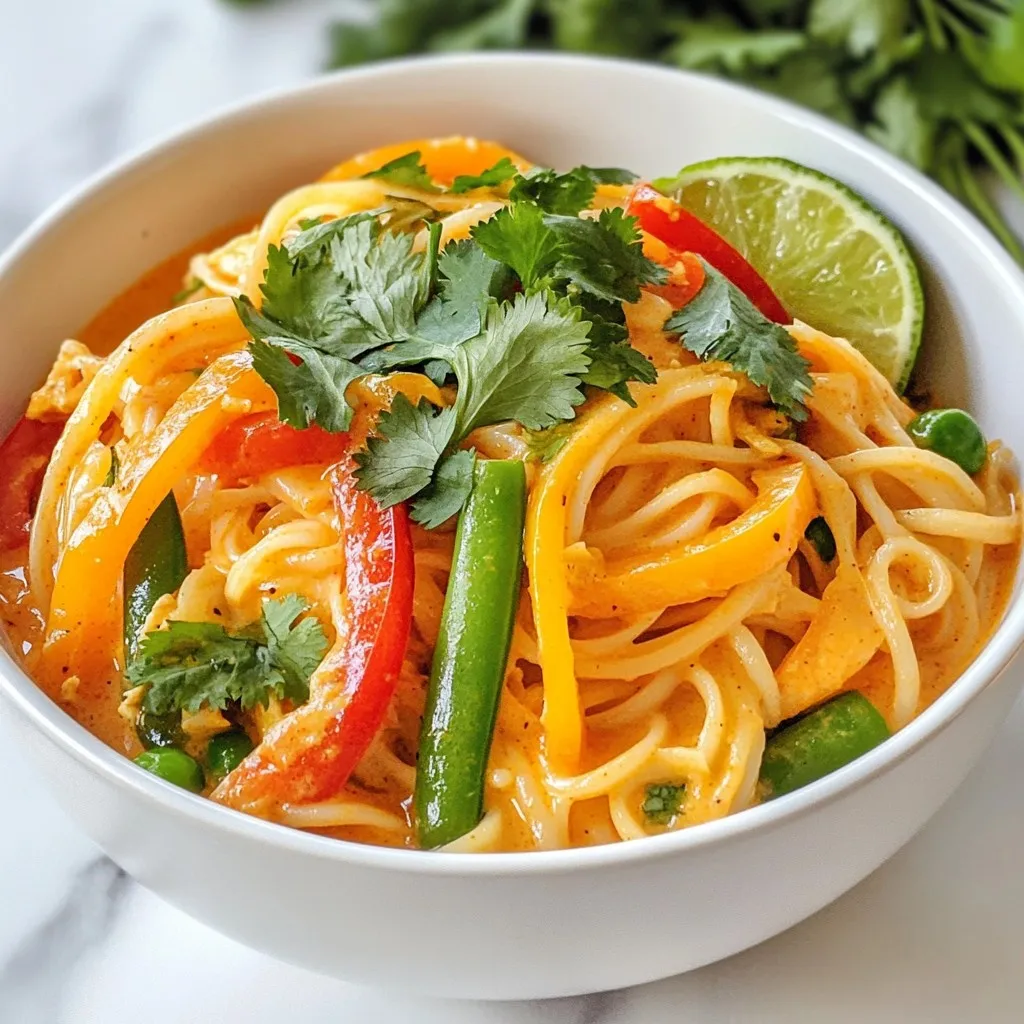
Looking for a quick yet delicious meal? Thai Coconut Curry Noodles is the perfect weeknight dinner for you! This dish combines soft rice noodles with creamy coconut milk and vibrant veggies. In just a step or two, you can whip up this flavorful meal that will make your taste buds dance. Ready to impress your family or surprise yourself? Let’s dive into how to make this scrumptious dish!
Why I Love This Recipe
- Quick and Easy: This recipe comes together in just 25 minutes, making it perfect for busy weeknights.
- Rich Flavors: The combination of coconut milk and red curry paste creates a luscious and aromatic sauce that’s irresistible.
- Vegetable Packed: Incorporating a variety of colorful vegetables not only enhances the dish visually but also boosts its nutritional value.
- Customizable: You can easily swap in your favorite proteins or veggies, making this dish adaptable to your tastes.
Ingredients
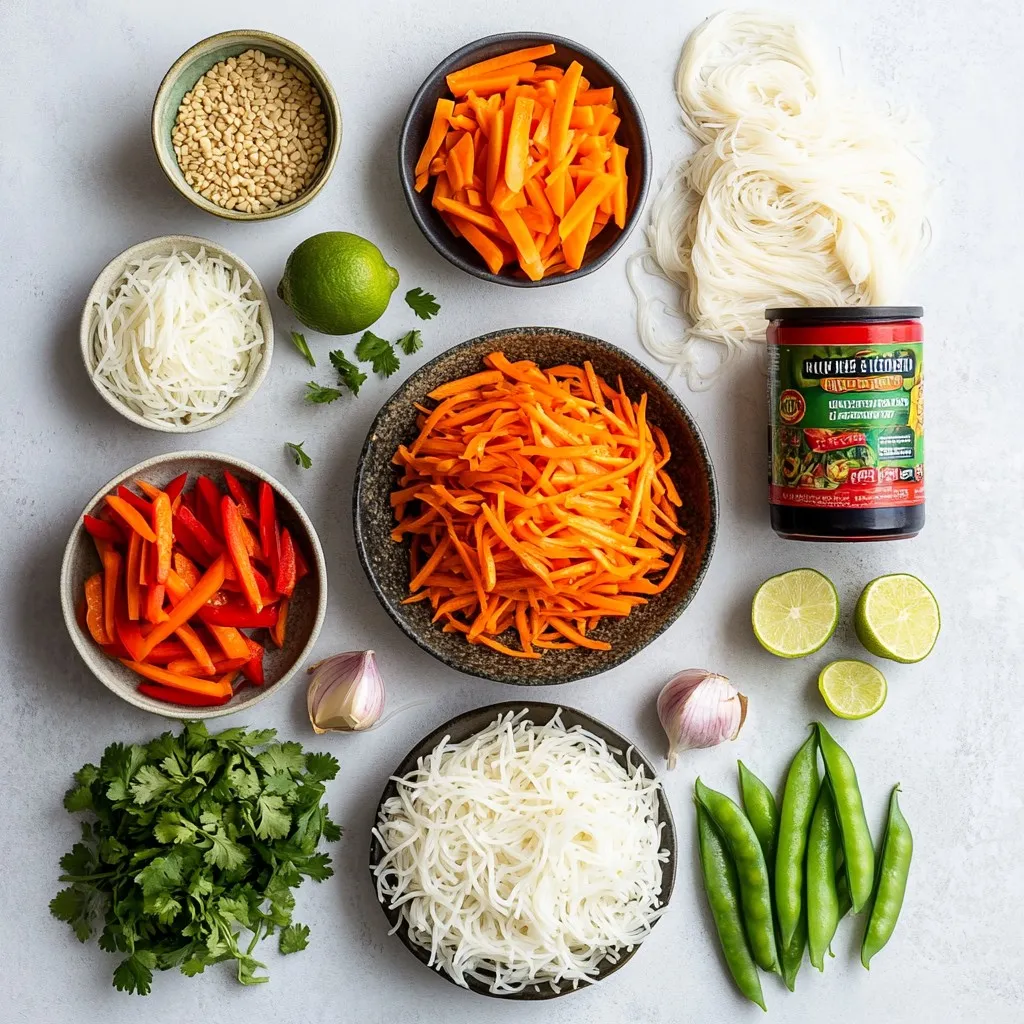
To make Thai Coconut Curry Noodles, you need a few key ingredients. Here’s what you will need:
– 200g rice noodles
– 1 can (400ml) coconut milk
– 2 tablespoons red curry paste
– 1 tablespoon vegetable oil
– 1 medium onion, thinly sliced
– 3 cloves garlic, minced
– 1 tablespoon ginger, grated
– 1 bell pepper, julienned (any color)
– 1 carrot, julienned
– 150g snap peas, trimmed
– 2 tablespoons soy sauce
– 1 tablespoon lime juice
– Fresh cilantro for garnish
– Sliced lime for serving
– Salt and pepper to taste
These ingredients blend together to create a rich and tasty dish. The rice noodles are soft and soak up the flavors well. Coconut milk adds creaminess and sweetness. Red curry paste gives it a spicy kick. Fresh veggies add crunch and color.
Make sure to have these items ready. This way, you can cook quickly and enjoy your meal sooner. Each ingredient plays a part in making this dish special. You’ll love how they combine!
Step-by-Step Instructions
Cooking the Noodles
1. Boiling method for rice noodles: Start by bringing a large pot of water to a boil. Add 200g of rice noodles to the boiling water. Cook them according to the package instructions until they are al dente. This usually takes about 4-6 minutes.
2. Setting aside after cooking: Once cooked, drain the noodles in a colander and set them aside. This will help you focus on the next steps without the noodles sticking together.
Sautéing Aromatics
1. Heating vegetable oil: In a large skillet or wok, heat 1 tablespoon of vegetable oil over medium heat. Wait until the oil is hot but not smoking.
2. Sautéing onion until softened: Add a thinly sliced medium onion to the skillet. Sauté for about 3-4 minutes until the onion is soft and translucent. This step builds a great base for your dish.
Adding Flavor
1. Incorporating garlic and ginger: Next, stir in 3 minced cloves of garlic and 1 tablespoon of grated ginger. Cook for 1-2 minutes until both are fragrant. This will add depth to your curry.
2. Mixing in red curry paste: Add 2 tablespoons of red curry paste to the skillet. Stir everything well for about 1 minute. This helps to release the wonderful flavors from the curry paste.
Adding Vegetables
1. Stir-frying bell pepper, carrot, and snap peas: Toss in 1 julienned bell pepper, 1 julienned carrot, and 150g of trimmed snap peas. Stir-fry for 2-3 minutes until the veggies are bright and slightly tender. They should still have a bit of crunch.
Mixing in Coconut Milk
1. Bringing mixture to a simmer: Pour in 1 can (400ml) of coconut milk. Stir well to combine and bring the mixture to a gentle simmer.
2. Letting flavors meld: Allow it to cook for about 5 minutes. This lets all the flavors blend nicely together.
Combining Everything
1. Stirring in rice noodles, soy sauce, and lime juice: Add the drained rice noodles, 2 tablespoons of soy sauce, and 1 tablespoon of lime juice to the skillet. Stir well to coat the noodles with the sauce.
2. Adjusting seasoning: Taste and adjust the seasoning with salt and pepper as needed. This step ensures your dish has the right balance of flavors.
Garnishing and Serving
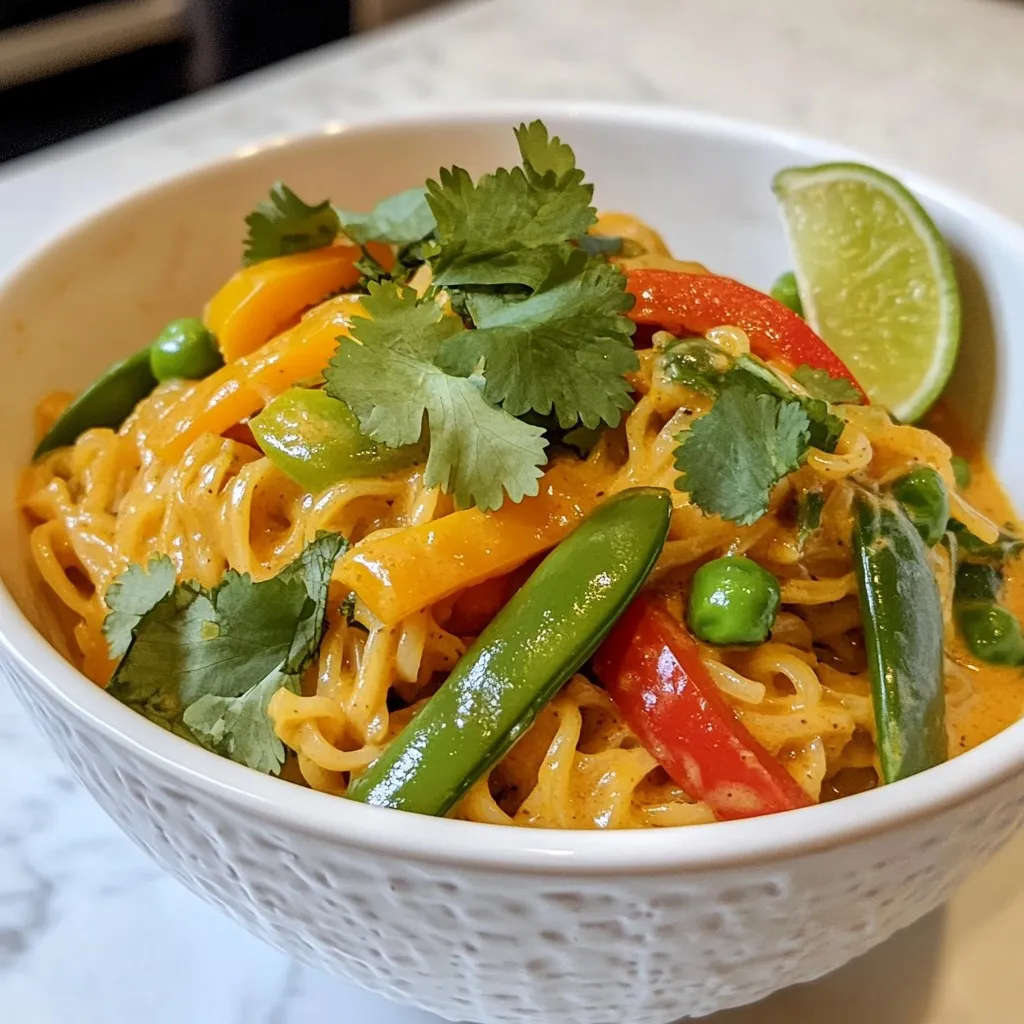
1. Adding cilantro and lime slices: Remove the skillet from heat. Garnish with fresh cilantro and serve with lime slices on the side. This adds a nice pop of color and flavor to your dish. Enjoy your delicious Thai Coconut Curry Noodles!
Tips & Tricks
Cooking Noodles Perfectly
When cooking rice noodles, avoid the common mistake of overcooking. Follow the package instructions closely. Rice noodles should be al dente, which means they should still have a bit of bite. After cooking, drain them and rinse briefly with cold water. This stops the cooking process and prevents clumping.
For the best texture, soak the rice noodles in hot water instead of boiling them. This method keeps them light and fluffy. Make sure to stir them gently during the soaking time. This helps avoid sticky noodles.
Customizing Spice Level
To adjust the spice level in your curry, you can change the amount of red curry paste. If you want it milder, start with one tablespoon. Taste and add more if you like it spicier.
For a milder flavor, use coconut milk without curry paste. You can also add a bit of sugar to balance the heat. If you want even less spice, try using sweet chili sauce instead of curry paste.
Enhancing Flavor Profiles
Adding fresh herbs can boost the flavor of your dish. Try tossing in fresh basil or mint right before serving. These herbs add freshness and depth.
You can also use lime zest for a bright touch. A sprinkle of toasted sesame seeds adds a nice crunch. If you love heat, a few slices of fresh chili pepper can elevate the dish even more.
Pro Tips
- Use Fresh Ingredients: Fresh vegetables and herbs will enhance the flavor of your curry, making it more vibrant and aromatic.
- Adjust Spice Level: If you prefer a milder curry, reduce the amount of red curry paste or add coconut milk to balance the heat.
- Perfectly Cooked Noodles: To prevent the rice noodles from getting mushy, rinse them under cold water after cooking to stop the cooking process.
- Garnish for Flavor: Fresh cilantro and lime juice not only add color but also a burst of flavor that elevates the entire dish.
Variations
Vegan Option
To make this dish vegan, swap out a few key ingredients. Use vegetable broth instead of coconut milk for a lighter base. Replace the red curry paste with a vegan brand or make your own using chili paste, garlic, and spices. You can also add tofu for protein.
Protein Additions
You can add different proteins to enhance your dish. For tofu, use firm or extra-firm, and cube it. Sauté the tofu until golden before adding it to the sauce. For chicken, cut it into thin strips and cook it with the onions. Shrimp is also a great choice; just toss them in when you add the coconut milk.
Alternative Vegetables
Feel free to get creative with your veggies. Seasonal options like zucchini or asparagus work well. You can also try bok choy or kale for a healthy twist. Use your favorite vegetables to make this dish personal and fun.
Storage Info
Storing Leftovers
To keep your Thai Coconut Curry Noodles fresh, place them in an airtight container. This helps keep moisture in and prevents them from drying out. If you have large portions, divide them into smaller containers. You can refrigerate the leftovers for up to three days. For longer storage, freeze the noodles. Use freezer-safe bags or containers. Make sure to label them with the date. This way, you can easily track how long they have been stored.
Reheating Instructions
Reheating these noodles is easy. You can use the stove or microwave. If you choose the stove, add a splash of water or coconut milk to a pan. Heat over low to medium heat and stir well. This helps prevent sticking. If you prefer the microwave, place the noodles in a bowl. Add a little water or coconut milk, cover, and heat in short bursts. Stir in between to heat evenly.
Shelf Life
When stored properly, your Thai Coconut Curry Noodles can stay fresh for about three days in the fridge. If you freeze them, they can last for up to three months. Just remember, the texture might change a bit after freezing. It’s best to eat them fresh for the best taste.
FAQs
What is the best type of noodles for Thai Coconut Curry?
The best noodles for Thai Coconut Curry are rice noodles. They soak up the sauce well. Their soft texture complements the creamy curry nicely. You can find them in Asian markets and some grocery stores. Pick thin rice noodles for a quick cook time.
Can I use homemade coconut milk?
Yes, you can use homemade coconut milk. It adds a fresh and rich flavor. To make it, blend shredded coconut with water, then strain it. This gives a natural taste that store-bought coconut milk may lack.
Is Thai Coconut Curry Noodles gluten-free?
Yes, Thai Coconut Curry Noodles can be gluten-free. Rice noodles contain no gluten. Just make sure to use gluten-free soy sauce. This way, you can enjoy the dish without worries.
What can I serve with Thai Coconut Curry Noodles?
You can serve many sides with these noodles. Try a fresh salad for crunch. Spring rolls are another great option. You can also enjoy some grilled vegetables on the side.
How can I make this dish less spicy?
To make this dish less spicy, use less red curry paste. You can also add more coconut milk to balance the heat. This will make the flavors milder without losing taste.
Can I make this recipe ahead of time?
Yes, you can make this recipe ahead of time. Cook the noodles and curry separately. Store them in the fridge until you are ready to eat. Reheat both before serving for the best flavor.
This blog post gave you a clear guide to making Thai Coconut Curry Noodles. We listed the key ingredients and offered step-by-step instructions for cooking. You learned tips for perfect noodles and ways to customize your dish. Whether you’re looking to make it vegan or add protein, there are options for everyone.
In final thoughts, don’t hesitate to get creative with flavors and veggies. Enjoy your cooking and the delicious result
Thai Coconut Curry Noodles
A delicious and creamy noodle dish infused with Thai flavors, featuring coconut milk and vibrant vegetables.
Course Main Course
Cuisine Thai
Servings 4
Calories 400 kcal
- 200 g rice noodles
- 400 ml coconut milk
- 2 tablespoons red curry paste
- 1 tablespoon vegetable oil
- 1 medium onion, thinly sliced
- 3 cloves garlic, minced
- 1 tablespoon ginger, grated
- 1 bell pepper julienned (any color)
- 1 carrot julienned
- 150 g snap peas, trimmed
- 2 tablespoons soy sauce
- 1 tablespoon lime juice
- to taste salt and pepper
- for garnish fresh cilantro
- for serving sliced lime
In a large pot of boiling water, cook the rice noodles according to the package instructions until al dente. Drain and set aside.
In a large skillet or wok, heat the vegetable oil over medium heat. Add the sliced onion and sauté for 3-4 minutes until softened.
Stir in the minced garlic and grated ginger, cooking for an additional 1-2 minutes until fragrant.
Add the red curry paste to the skillet, stirring well to combine with the aromatics, cooking for about 1 minute to release its flavors.
Toss in the bell pepper, carrot, and snap peas, stir-frying for 2-3 minutes until the vegetables are bright and slightly tender.
Pour in the coconut milk and bring the mixture to a gentle simmer. Allow it to cook for about 5 minutes to let the flavors meld together.
Stir in the cooked rice noodles, soy sauce, and lime juice, making sure the noodles are well coated with the curry sauce. Season with salt and pepper to taste.
Remove from heat, garnish with fresh cilantro, and serve with lime slices on the side for an added zing.
Feel free to add your favorite vegetables or protein.
Keyword coconut, curry, noodles, vegetarian
WANT TO SAVE THIS RECIPE?