Go Back
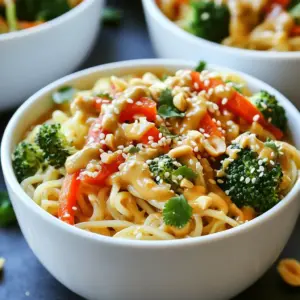
- Ramen noodles options: You can choose whole wheat or gluten-free ramen noodles. Whole wheat adds a nutty taste, while gluten-free offers a lighter option. - Vegetables needed: For this dish, you’ll need: - 1 cup pea shoots or baby spinach for freshness. - 1 red bell pepper, thinly sliced for sweetness and color. - 1 carrot, julienned for crunch and flavor. - 1 cup broccoli florets for nutrition and texture. - 2 green onions, chopped for a mild onion taste. - Peanut sauce components: The rich peanut sauce includes: - 1/2 cup creamy peanut butter for creaminess. - 1/4 cup soy sauce or tamari for saltiness. - 2 tablespoons maple syrup for a touch of sweetness. - 2 tablespoons rice vinegar for a tangy kick. - 1 tablespoon sriracha to add heat, adjust to your taste. These ingredients combine to create a colorful, tasty dish perfect for any meal. Enjoy the rich flavors and vibrant colors as you prepare this delightful ramen! {{ingredient_image_1}} To cook the ramen noodles, start by boiling water in a large pot. Make sure the water is at a rolling boil before adding the noodles. Cook the noodles according to the package instructions, usually around 3 to 5 minutes. Once they are tender, drain the noodles in a colander. Rinse them under cold water to stop the cooking process. This helps keep them from getting too soft. Set the noodles aside while you prepare the rest of the dish. Next, we’ll make the peanut sauce. In a large bowl, combine peanut butter, soy sauce, maple syrup, rice vinegar, and sriracha. Whisk these ingredients together until the mixture is smooth. If you want a creamier sauce, slowly stir in coconut milk. Keep adding until you reach the creaminess you like. This sauce will bring rich flavors to your ramen. Now, it’s time to sauté the vegetables. Heat sesame oil in a large skillet over medium heat. Add minced ginger and garlic first. Cook them for about 1 minute until they smell great. Then, add the broccoli florets, red bell pepper, and carrots. Stir-fry these veggies for 4 to 5 minutes. You want them tender but still crisp. This step adds color and nutrients to your dish. Timing is key here; don’t overcook the vegetables, or they will lose their crunch. Once your veggies are ready, you can combine everything for a delicious meal! To adjust the spice level in your Vegan Thai Peanut Ramen, start with less sriracha. You can add more as you cook and taste. If you want a milder dish, skip the sriracha or use just a little. For those who love heat, add chili flakes or fresh chili peppers. Adding herbs can really boost the flavor. Try fresh basil or mint for a fresh taste. You can also use cilantro, which adds a nice touch. Adding lime juice gives a bright burst of flavor. To get crisp-tender veggies, stir-fry them quickly over high heat. Keep them moving in the pan. This helps them cook evenly and stay vibrant. Start with harder veggies like broccoli and carrots, then add softer ones like bell pepper last. For your ramen noodles, always follow the package directions for cooking. After cooking, rinse them under cold water. This stops the cooking and keeps them from getting sticky. Toss them lightly with a splash of oil to keep them separate. For a great look, serve your ramen in deep bowls. Place the noodles first, then arrange the colorful veggies on top. This makes the dish pop with color. Drizzle a bit of extra peanut sauce for a glossy finish. Garnish with chopped peanuts, sesame seeds, and fresh cilantro. This adds texture and a fresh taste. You can also serve it with lime wedges for extra zing. Pro Tips Use Fresh Ingredients: Opt for fresh vegetables for the best flavor and texture. Fresh produce enhances the overall taste of the dish. Customize Spice Level: Adjust the amount of sriracha in the sauce to suit your taste. You can start with less and add more for a spicier kick. Make Ahead: Prepare the peanut sauce in advance and store it in the refrigerator. This saves time on busy weeknights! Garnish Generously: Don't skimp on the garnishes! Chopped peanuts, sesame seeds, and cilantro add great texture and flavor to the dish. {{image_2}} You can easily change this recipe to fit your needs. If you have a nut allergy, try sunbutter or tahini instead of peanut butter. For gluten-free options, use rice noodles or gluten-free ramen noodles. These swaps keep the dish tasty and safe. Adding protein can also boost your meal. Tofu is a great choice. Press and cube it, then sauté until golden. Tempeh is another option. It has a nutty flavor and works well in this dish. Seitan is perfect if you want a chewy texture. Cook it with the veggies for a heartier meal. Pair this ramen with a light salad. A cucumber salad with a squeeze of lime adds freshness. You can also serve it with spring rolls for a fun touch. These sides balance the rich flavors of the ramen. To make this meal complete, think about adding a protein. You can top your ramen with crispy tofu or tempeh. This way, you get a filling dish that satisfies. If you want to change the flavor of the peanut sauce, there are many options. Try almond butter for a different nutty taste. You can also use cashew butter for a creamier texture. For a tangy twist, add lime juice to the sauce. This brightens the flavors and adds zest. You can adjust the sriracha for more heat or skip it for a milder dish. By testing these variations, you can create a unique ramen every time. Enjoy exploring the different tastes! To keep your vegan Thai peanut ramen fresh, store it in an airtight container. Place it in the fridge within two hours of cooking. This helps maintain flavor and texture. Use the ramen within three to four days for the best taste. When reheating, do so gently. Use a pan over low heat. Add a splash of water or broth to keep it moist. Stir often to avoid sticking. You can freeze the ramen for longer storage. However, it’s best to freeze the noodles and sauce separately. Cool them first before putting them in freezer-safe bags. The noodles last for up to three months in the freezer. When you want to eat it, thaw them in the fridge overnight. To reheat, warm them in a pan over low heat. Add a bit of water or broth to keep it creamy. Once prepared, the cooked ramen noodles last about three to four days in the fridge. The peanut sauce can also stay good for about a week. Fresh vegetables, like bell peppers and broccoli, should be used within a few days. If they turn brown or mushy, it’s time to toss them. Always trust your senses. If something smells off, don’t eat it. Yes, you can make this ramen in advance. Cook the noodles and veggies separately. Let them cool before putting them in a container. You can store the peanut sauce in another container. Keep both in the fridge for up to three days. When ready to eat, reheat the noodles and veggies in a pan. Add the sauce and mix well. This keeps everything fresh and tasty. If you have nut allergies, use sun butter or tahini. Both can give a nice, creamy texture. You can also try almond butter or soy nut butter if you prefer. Each of these options adds a different flavor while keeping the dish vegan. To avoid mushy noodles, cook them just until al dente. This means they should be firm to the bite. Rinse them under cold water to stop cooking. Mix them with oil if you are not using them right away. This helps keep them from sticking together. Always add them to the pan last to mix with the veggies and sauce. This blog post shared the essentials for making Vegan Thai Peanut Ramen. You learned about the key ingredients like ramen noodles, fresh veggies, and peanut sauce components. I guided you through cooking methods and how to enhance flavors using spices. Remember, you can customize your dish by altering ingredients or trying different sauces. Perfecting storage ensures your leftovers stay fresh. I hope you try this simple and tasty recipe soon. Happy cooking!

Creamy Vegan Thai Peanut Ramen

A delicious and creamy vegan ramen dish with a flavorful peanut sauce and fresh vegetables.
Course Main Course
Cuisine Thai
Servings 4
Calories 450 kcal

Ingredients
  

  • 200 g ramen noodles (preferably whole wheat or gluten-free)
  • 1 cup pea shoots or baby spinach
  • 1 red bell pepper, thinly sliced
  • 1 carrot, julienned
  • 1 cup broccoli florets
  • 2 green onions, chopped
  • 1 tablespoon sesame oil
  • 1 tablespoon fresh ginger, minced
  • 2 cloves garlic, minced
  • 0.5 cup creamy peanut butter
  • 0.25 cup soy sauce or tamari
  • 2 tablespoons maple syrup
  • 2 tablespoons rice vinegar
  • 1 tablespoon sriracha (or to taste)
  • 0.5 cup coconut milk (optional for creaminess)
  • Chopped peanuts and sesame seeds for garnish
  • Fresh cilantro for garnish (optional)

Instructions
 

  • In a large pot, bring water to a boil. Add the ramen noodles and cook according to package instructions. Once done, drain and rinse under cold water to stop the cooking process. Set aside.
  • In a bowl, whisk together the peanut butter, soy sauce, maple syrup, rice vinegar, and sriracha until smooth. If you prefer a creamier sauce, gradually stir in coconut milk to reach your desired consistency.
  • Heat the sesame oil in a large skillet over medium heat. Add the minced ginger and garlic, sautéing for about 1 minute until fragrant. Then, add the broccoli florets, red bell pepper, and carrots. Stir-fry for about 4-5 minutes until the vegetables are tender but still crisp.
  • Add the cooked ramen noodles into the skillet with the sautéed vegetables. Pour the peanut sauce over the mixture and toss everything together until the noodles and veggies are evenly coated.
  • Add the pea shoots or baby spinach and chopped green onions. Toss again for a couple of minutes until the greens wilt slightly.
  • Divide the ramen into bowls. Top each serving with chopped peanuts, sesame seeds, and fresh cilantro if using.

Notes

Serve in deep bowls with colorful vegetables on top for a beautiful presentation.
Keyword noodles, peanut sauce, ramen, Thai, vegan